Nonprofit Accounting Software Comparison: Your Guide to Smarter Finances
nonprofit accounting software comparison

Nonprofit Accounting Software Comparison: Your Guide to Smarter Finances

Discover the ideal accounting software to streamline operations, enhance transparency, and maximize your mission's impact.

Find Your Software Now

Key Takeaways

  • ✓ Nonprofits require fund accounting, segregating funds by purpose (restricted vs. unrestricted).
  • ✓ Compliance with FASB (Financial Accounting Standards Board) is crucial for reporting and transparency.
  • ✓ Specialized nonprofit software automates grant tracking, donor management, and budgeting.
  • ✓ Cloud-based solutions offer accessibility, scalability, and often integrate with other nonprofit tools.

How It Works

1
Assess Your Needs

Identify your organization's specific financial requirements, budget constraints, and current pain points. Consider donor volume, grant complexity, and reporting obligations.

2
Research Top Contenders

Explore leading nonprofit accounting software options, focusing on features like fund accounting, reporting, and integration capabilities. Look for solutions tailored to organizations of your size and mission.

3
Request Demos & Trials

Engage with vendors to see the software in action and, if possible, utilize free trials. This hands-on experience will help you evaluate user-friendliness and feature relevance.

4
Evaluate & Implement

Compare features, pricing, customer support, and scalability based on your assessment. Once chosen, plan a thorough implementation process, including data migration and staff training.

Understanding the Unique Demands of Nonprofit Accounting

Close-up of a vintage handwritten ledger detailing financial records and accounts. Photo: Pixabay / Pexels
Nonprofit accounting isn't merely about tracking income and expenses; it's a specialized discipline governed by unique regulatory requirements and a distinct financial reporting framework. Unlike for-profit entities, nonprofits operate under the principle of stewardship, managing funds entrusted to them for specific purposes. This necessitates a robust system known as fund accounting, which is the cornerstone of effective nonprofit financial management. Fund accounting categorizes resources into different 'funds' based on donor restrictions or internal designations. For example, a donation earmarked for a specific program cannot be commingled with general operating funds. A sophisticated nonprofit accounting software comparison will highlight solutions that adeptly handle these distinctions, ensuring that every dollar is accounted for according to its intended use. Key to this is compliance with the Financial Accounting Standards Board (FASB) pronouncements, particularly ASC 958, which dictates how nonprofits classify net assets and present financial statements. These statements—the Statement of Financial Position, Statement of Activities, and Statement of Cash Flows—must clearly differentiate between net assets with donor restrictions and net assets without donor restrictions. Generic accounting software, like QuickBooks, often falls short in providing the granular detail and automated reporting required to meet these standards efficiently. While QuickBooks can be adapted with workarounds, it typically lacks native fund accounting capabilities, leading to manual processes, increased risk of errors, and difficulty in generating compliant reports. A dedicated nonprofit accounting solution, however, builds these functionalities directly into its core, simplifying compliance and enhancing financial transparency. This is crucial not only for satisfying auditors and regulators but also for demonstrating accountability to donors and the public. Without proper fund accounting, a nonprofit risks mismanaging funds, facing audit findings, and eroding donor trust, ultimately jeopardizing its mission. Therefore, when embarking on a nonprofit accounting software comparison, prioritizing solutions with native fund accounting and robust reporting features is paramount for long-term success and compliance. The ability to track grants, pledges, and restricted donations seamlessly is not just a convenience, but a fundamental requirement for any charitable organization aiming for financial integrity and operational excellence.

Key Features to Look for in Nonprofit Accounting Software Solutions

Volunteer organizing donation boxes with clothes and supplies for charity. Photo: Gustavo Fring / Pexels
When evaluating options in a nonprofit accounting software comparison, specific features stand out as non-negotiable for effective financial management. Beyond the foundational fund accounting capabilities discussed previously, robust reporting is critical. Nonprofits need to generate accurate and timely reports for various stakeholders, including boards, donors, grantors, and regulatory bodies. Look for software that offers customizable dashboards and predefined reports such as Statement of Financial Position, Statement of Activities, and Statement of Cash Flows, all compliant with FASB standards. The ability to drill down into transaction details directly from a report is also invaluable for auditing and analysis. Furthermore, grant management features are essential for organizations that rely on external funding. This includes tracking grant expenditures against budgets, monitoring grant timelines, and generating specific reports required by funders. Without these features, managing multiple grants can become an administrative nightmare, increasing the risk of non-compliance and lost funding. Donor management integration is another significant feature. While some nonprofits use separate CRM systems, seamless integration between donor data and financial records provides a holistic view of donor relationships and contributions. This allows for accurate pledge tracking, receipt generation, and personalized donor communications, strengthening donor retention and fundraising efforts. Budgeting and forecasting tools are also vital, enabling organizations to plan effectively, monitor spending, and make informed financial decisions. The best software will allow for multi-year budgeting, scenario planning, and real-time budget versus actual reporting. Finally, consider the software's scalability and integration capabilities. As your nonprofit grows, your accounting needs will evolve. The chosen software should be able to accommodate increased transaction volumes, new programs, and additional users without significant disruption. Integration with other essential nonprofit tools, such as payroll, fundraising platforms, and volunteer management systems, can create a unified ecosystem, reducing data entry and improving overall efficiency. Security features, including data encryption and user access controls, are also paramount to protect sensitive financial information. A thorough nonprofit accounting software comparison should weigh these features heavily against your organization's unique operational needs and future growth aspirations to ensure a wise long-term investment.

Top Contenders in the Nonprofit Accounting Software Arena: A Detailed Look

Volunteers packing food and medicine boxes for donation. Community service and support efforts. Photo: RDNE Stock project / Pexels
Navigating the landscape of nonprofit accounting software can be daunting, but a detailed nonprofit accounting software comparison can help clarify the best fit for your organization. Let's delve into some of the leading solutions, examining their strengths, target users, and key offerings. **Blackbaud Financial Edge NXT:** Often considered the gold standard for larger, more complex nonprofits, Financial Edge NXT offers comprehensive fund accounting, advanced grant management, and powerful reporting. Its cloud-based platform provides accessibility and integrates deeply with other Blackbaud solutions like Raiser's Edge NXT for fundraising. It excels in managing multiple funds, complex allocations, and sophisticated reporting for large endowments or multi-entity organizations. However, its robust feature set comes with a higher price tag and a steeper learning curve, making it less suitable for small or nascent nonprofits. **Sage Intacct (Nonprofit Edition):** Sage Intacct is a highly regarded cloud-based financial management system known for its robust multi-dimensional general ledger, which is exceptionally well-suited for fund accounting. It allows nonprofits to track financial data by fund, grant, program, department, and more, providing unparalleled insight without complex workarounds. Its strong reporting and dashboard capabilities are a major draw, offering real-time financial visibility. Sage Intacct is scalable and integrates with numerous third-party applications, making it a powerful choice for growing and mid-sized to large nonprofits. While it offers immense flexibility, its implementation can be complex and may require a dedicated consultant. **Aplos:** Tailored specifically for small to mid-sized nonprofits and churches, Aplos provides an intuitive, user-friendly interface with essential fund accounting features. It offers budgeting, donor management, and robust reporting, including IRS Form 990 preparation. Its integrated fundraising tools, including online donation pages and communication features, make it an attractive all-in-one solution for organizations seeking simplicity without sacrificing core nonprofit functionalities. Aplos is known for its affordability and ease of use, making it an excellent entry point for organizations moving away from spreadsheets or generic accounting software. While it may not have the advanced customization or scalability of Blackbaud or Sage Intacct, it offers a strong value proposition for its target market. **QuickBooks Desktop Premier/Enterprise for Nonprofits:** While not purpose-built for nonprofits, QuickBooks, particularly its Premier or Enterprise editions, offers a 'Nonprofit' industry-specific version with some tailored charts of accounts and reports. Many smaller nonprofits start with QuickBooks due to its familiarity and lower initial cost. It can be made to work for fund accounting through extensive use of classes and jobs, but this often requires significant manual effort and workarounds. For organizations with simple financial structures and limited restricted funds, it can be a viable, budget-friendly option. However, as organizations grow and their financial complexities increase, the limitations of QuickBooks in handling true fund accounting, grant tracking, and FASB-compliant reporting become more apparent. Migrating from QuickBooks to a specialized solution is a common trajectory for growing nonprofits. **AccuFund:** AccuFund is another comprehensive fund accounting solution designed for government and nonprofit organizations. It offers modules for general ledger, accounts payable, accounts receivable, payroll, grant management, and more. It is highly customizable and scalable, catering to a wide range of nonprofit sizes and complexities. AccuFund is known for its strong reporting capabilities and its ability to handle complex financial structures. It's often chosen by organizations requiring robust financial control and detailed tracking, though it may have a steeper learning curve than more entry-level solutions. This detailed nonprofit accounting software comparison reveals a spectrum of choices, each with its unique advantages. The 'best' software ultimately depends on your organization's size, budget, complexity, and specific needs. It's crucial to consider not just the features, but also ease of use, customer support, and potential for integration with your existing technological ecosystem.

Avoiding Common Pitfalls and Making the Right Choice
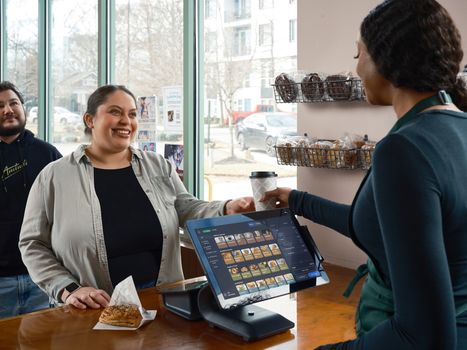
Barista uses modern POS system in café; smiling customer with pastry and coffee in hand. Indoor café setting. Photo: SpotOn POS / Pexels
When conducting a nonprofit accounting software comparison, several common pitfalls can derail your decision-making process. The most frequent mistake is underestimating the true cost of ownership. Beyond the initial subscription or purchase price, consider implementation costs, data migration fees, training expenses, and ongoing support contracts. A seemingly cheaper solution might end up costing more in the long run if it requires extensive manual workarounds or lacks adequate support. Another pitfall is failing to involve key stakeholders in the selection process. Your finance team, program managers, and even board members might have unique insights into reporting needs and operational workflows. Their input is crucial to ensure the chosen software meets diverse organizational requirements and gains widespread adoption. Ignoring future growth is also a common error; selecting a system that barely meets current needs can lead to another costly migration in just a few years. Opt for a scalable solution that can grow with your organization. To make the right choice, begin with a thorough needs assessment. Document your current accounting processes, identify pain points, and define your desired outcomes. Prioritize features based on your organization's size, complexity, and specific mission. For example, a small volunteer-run charity might prioritize ease of use and affordability, while a large foundation will require robust grant management and advanced reporting. Don't solely rely on vendor marketing; request personalized demos and, if available, free trials to get hands-on experience with the software. Pay close attention to the user interface, reporting capabilities, and integration options with other systems like CRM or payroll. Check customer reviews and testimonials, focusing on those from similar-sized nonprofits. Finally, evaluate vendor support and training resources. A strong support system can be invaluable during implementation and ongoing use. By systematically addressing these considerations and avoiding common mistakes, your nonprofit can select an accounting software that truly empowers your financial operations, enhances transparency, and allows you to focus more on fulfilling your mission.

Comparison

FeatureBlackbaud Financial Edge NXTSage Intacct (Nonprofit)Aplos
Fund AccountingComprehensiveMulti-dimensional GL, ExcellentIntegrated, User-friendly
Grant ManagementAdvancedStrongBasic to Moderate
Reporting & DashboardsHighly Customizable, RobustReal-time, PowerfulStandard & IRS 990
Donor ManagementDeeply Integrated (Blackbaud Ecosystem)Via IntegrationsIntegrated Basic CRM
ScalabilityEnterprise-levelHighly ScalableSmall to Mid-size
Ease of UseModerate to High Learning CurveModerate Learning CurveHigh
Pricing TierHighMedium to HighLow to Medium

What Readers Say

"Our nonprofit accounting software comparison led us to Sage Intacct, and it's been transformative. The multi-dimensional accounting gives us insights we never had before, simplifying our grant reporting immensely."

Sarah Chen · Austin, TX

"After years of struggling with QuickBooks, we switched to Aplos. The integrated fund accounting and donor management are perfect for our small charity, making our financial processes so much easier."

David Rodriguez · Miami, FL

"Blackbaud Financial Edge NXT streamlined our complex endowment management and multi-program reporting. Our audit process is now significantly faster and more accurate, saving us countless hours."

Emily White · Seattle, WA

"While the implementation of our chosen software from our nonprofit accounting software comparison was a bit challenging, the long-term benefits in compliance and efficiency have far outweighed the initial hurdles. Support was excellent."

Mark Johnson · Denver, CO

"Finding the right solution through a comprehensive nonprofit accounting software comparison helped us move away from spreadsheets. Our board now has real-time financial dashboards, which has improved strategic planning."

Maria Garcia · Chicago, IL

Frequently Asked Questions

What is the biggest difference between nonprofit accounting software and commercial software?

The primary difference lies in fund accounting. Nonprofit software is purpose-built to track and report on restricted and unrestricted funds, ensuring compliance with FASB standards and donor intent. Commercial software typically focuses on profit/loss and equity, lacking native capabilities for managing designated funds.

Is it possible to use QuickBooks for my nonprofit?

Yes, many small nonprofits start with QuickBooks. However, it requires extensive manual workarounds (using classes/jobs) to simulate fund accounting. As your organization grows or handles more complex grants and restricted funds, dedicated nonprofit software becomes essential for efficiency, compliance, and accurate reporting.

How do I choose the right nonprofit accounting software for my organization?

Start by assessing your organization's specific needs, budget, and size. Prioritize features like fund accounting, grant management, reporting capabilities, and ease of use. Request demos, read reviews, and consider scalability for future growth. Involve your finance team in the decision-making process.

What is the typical cost of nonprofit accounting software?

Costs vary widely based on features, user count, and vendor. Entry-level solutions like Aplos might start from $50-$100/month, while comprehensive enterprise-level systems like Blackbaud or Sage Intacct can range from several hundred to thousands of dollars per month, plus implementation fees. Many offer nonprofit discounts.

Should I prioritize cloud-based or on-premise accounting software for my nonprofit?

Cloud-based (SaaS) software is generally recommended for nonprofits due to its accessibility, automatic updates, lower upfront IT costs, and scalability. On-premise solutions require your own servers and IT maintenance, which can be a burden for most nonprofits. The trend is strongly towards cloud solutions.

Who should be involved in the nonprofit accounting software selection process?

Key stakeholders should include the finance director/controller, executive director, program managers (who interact with budgets/grants), and potentially a board member from the finance committee. Their collective input ensures the chosen software meets operational, reporting, and governance needs.

How important is integration with other nonprofit tools?

Integration is very important. Seamless connections with your donor management (CRM), payroll, and fundraising platforms reduce duplicate data entry, improve data accuracy, and provide a holistic view of your organization's operations. This streamlines workflows and enhances overall efficiency.

What are some emerging trends in nonprofit accounting software?

Key trends include increased automation (e.g., AI-powered data entry), enhanced data analytics and predictive forecasting, deeper integration capabilities with a broader ecosystem of nonprofit tools, and a continued shift towards user-friendly cloud platforms that offer mobile accessibility and robust security features.

Making the right choice in your nonprofit accounting software comparison is crucial for your organization's financial health and mission impact. Take the time to evaluate your needs, explore leading solutions, and invest in a system that empowers your team to manage funds effectively, ensure transparency, and drive your cause forward. Start your journey to smarter financial management today.

Topics: nonprofit accounting software comparisoncharity finance softwarefund accounting solutionsnonprofit financial managementbest software for nonprofits
Leo List

DK Escorts LU Escorts AT Escorts SE Escorts FI Escorts CH Escorts DE Escorts HR Escorts IE Escorts GR Escorts CZ Escorts NO Escorts BE Escorts FR Escorts SI Escorts IL Escorts NL Escorts PL Escorts HU Escorts ES Escorts IT Escorts PT Escorts SK Escorts RO Escorts ZA Escorts UY Escorts US Escorts UK Escorts NZ Escorts AU Escorts
Brampton weed
Adultwork EstrelaBet Vai de Bet R7 Bet Betão Galera Bet Rainbet Bet9ja Shop SportyBet BetKing Sisal Loto Foot Hollywoodbets YesPlay Odibets RushBet Jugabet BetWarrior BetCity MSport betPawa Fortebet