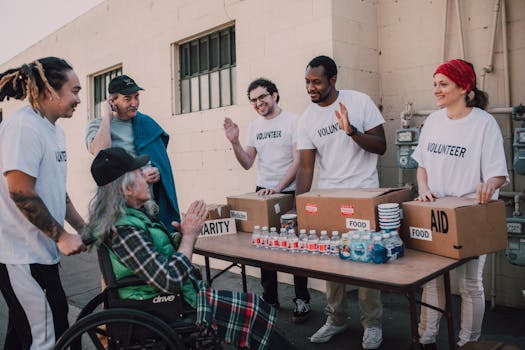
Nonprofit Fundraising Ideas for Beginners: Your Ultimate Guide
nonprofit fundraising ideas for beginners

Nonprofit Fundraising Ideas for Beginners: Your Ultimate Guide

Unlock the secrets to successful fundraising and empower your nonprofit's mission from day one.

Start Fundraising Today!

Key Takeaways

  • ✓ Over 1.5 million nonprofits exist in the US, all relying on fundraising.
  • ✓ Individual donations account for over 70% of all charitable giving.
  • ✓ Online fundraising has grown by over 10% annually for the past decade.
  • ✓ A clear mission and compelling story are crucial for attracting donors.

How It Works

1
Define Your 'Why'

Clearly articulate your nonprofit's mission, vision, and the specific impact donations will have. This forms the emotional core of your fundraising efforts.

2
Identify Your Audience

Understand who is most likely to support your cause and tailor your communication to resonate with them. Different demographics respond to different appeals.

3
Choose the Right Strategies

Select fundraising methods that align with your resources, target audience, and organizational goals. Start simple and scale up as you gain experience.

4
Build Relationships & Thank Donors

Fundraising is about building lasting connections, not just collecting money. Express genuine gratitude and keep donors informed about their impact.

Understanding the Fundamentals of Nonprofit Fundraising

Two volunteers knocking on door during a community outreach event, holding a small American flag. Photo: RDNE Stock project / Pexels
Embarking on the journey of nonprofit fundraising can feel daunting, especially for beginners. The landscape is vast, filled with various strategies, technologies, and best practices. However, at its core, fundraising for a nonprofit is about connecting passionate individuals with a cause that needs support. It's about telling your story in a way that inspires action and demonstrates tangible impact. Before diving into specific tactics, it's crucial to grasp the foundational principles that underpin all successful fundraising efforts. Firstly, clarity of mission is paramount. Why does your nonprofit exist? What specific problem are you solving, and for whom? Donors, whether individuals, corporations, or foundations, want to understand the 'why' behind their contribution. A vague mission statement will struggle to capture attention, let alone open wallets. Spend time refining your mission and vision statements, ensuring they are concise, compelling, and clearly communicate your organization's purpose. This clarity will serve as the bedrock for all your fundraising communications, from website copy to grant applications. Secondly, effective communication is key. Fundraising isn't just asking for money; it's about building relationships. This involves actively listening to your community, understanding their concerns, and then articulating how your nonprofit addresses those concerns. Your communication should be transparent, authentic, and consistent across all channels. Share success stories, highlight the challenges you face, and always show the direct impact of donations. People give to people, and they give to causes they believe in. Your communication should foster that belief and trust. Thirdly, understand your audience. Not all potential donors are the same. Some might be interested in direct service provision, others in advocacy, and some in long-term systemic change. Segmenting your potential donor base allows you to tailor your messaging and choose appropriate fundraising channels. For instance, younger donors might respond well to social media campaigns and peer-to-peer fundraising, while older donors might prefer direct mail or planned giving options. Researching demographics, interests, and giving patterns will significantly enhance your fundraising effectiveness. Finally, embrace the concept of donor stewardship. Fundraising doesn't end when a donation is received; in fact, that's just the beginning of a crucial relationship. Stewardship involves thanking donors promptly and genuinely, demonstrating the impact of their gift, and keeping them engaged with your organization's work. A well-stewarded donor is more likely to become a repeat donor and even an advocate for your cause. This long-term perspective on donor relations is vital for sustainable fundraising. Many resources, including those found at nonprofit resource centers, emphasize the importance of this ongoing engagement. Neglecting stewardship is one of the most common mistakes new nonprofits make, leading to high donor attrition rates. Building a robust stewardship plan from the outset will pay dividends for years to come. It’s not just about getting the first donation, but about cultivating a community of loyal supporters who believe in your mission as much as you do. This foundational understanding will empower you to navigate the various fundraising strategies with confidence and purpose.

Practical & Accessible Fundraising Ideas for New Nonprofits

Smiling volunteer holding a box labeled 'Food Aid' outside a van with 'Food Supplies' sign. Photo: RDNE Stock project / Pexels
Once you have a solid understanding of the fundraising fundamentals, it's time to explore practical and accessible ideas that even beginners can implement. The goal here is to start small, build momentum, and learn what resonates with your community before scaling up. Don't feel pressured to launch a massive gala event right away; often, the simplest ideas yield surprisingly effective results. **Online Donation Platform & Campaign:** This is arguably the most fundamental step for any modern nonprofit. Set up an easy-to-use online donation page on your website. Platforms like PayPal, Stripe, Classy, or Donorbox offer straightforward integration. Once your page is live, launch a simple online campaign. This could be a 'launch campaign' introducing your nonprofit, a specific project campaign (e.g., 'Help us feed 50 families this month'), or a general appeal. Share the link across all your social media channels, email signatures, and any physical materials. Make sure your donation page is mobile-friendly and clearly articulates where the money goes. A compelling story with a clear call to action on your donation page can significantly increase conversion rates. **Social Media Appeals:** Leverage the power of social media. Platforms like Facebook, Instagram, and Twitter allow you to reach a broad audience at little to no cost. Share compelling stories, impactful images, and short videos that highlight your work. Use relevant hashtags to increase visibility. Consider running a 'Giving Tuesday' campaign or a specific challenge (e.g., 'Donate $10 and tag a friend'). Facebook and Instagram also have built-in donation tools that make it easy for followers to contribute directly. Remember to engage with comments, thank donors publicly (with their permission), and regularly update your followers on your progress. **Peer-to-Peer Fundraising:** Empower your supporters to fundraise on your behalf. This can be incredibly effective as people are more likely to donate when asked by a friend or family member. Platforms like Classy, GoFundMe Charity, or even Facebook's fundraising tools allow individuals to create personal fundraising pages for your nonprofit. They can then share their page with their network, explaining why your cause is important to them. Provide them with a toolkit including your logo, mission statement, suggested messaging, and impactful images to make it easy for them to advocate for you. **Small Community Events:** Think local and accessible. A bake sale, a car wash, a community yard sale, or a small raffle can be excellent ways to raise funds and awareness. These events not only bring in donations but also help you connect with your local community face-to-face, recruit volunteers, and spread the word about your mission. Partner with local businesses to host events or secure donations for raffles. The key is to keep these events manageable in terms of planning and resources, especially when you're just starting out. **Grant Writing (Small Grants):** While grant writing can seem intimidating, many foundations offer small grants specifically for new or grassroots organizations. Start by researching local community foundations or corporate giving programs that align with your mission. Look for grants with simpler application processes and smaller award amounts to gain experience. Websites like GrantStation or Foundation Directory Online can help you identify potential funders. Focus on clearly articulating your need, your proposed solution, and the expected impact. Even a small grant can provide crucial seed funding and build your organization's credibility. **Merchandise Sales:** Create branded merchandise like t-shirts, mugs, or tote bags with your nonprofit's logo and a compelling message. Sell these items online or at community events. This not only generates revenue but also serves as a form of marketing, as supporters become walking billboards for your cause. Ensure the merchandise is high-quality and aligns with your brand identity. Platforms like Bonfire or CustomInk can help you design and sell custom apparel with minimal upfront cost. **Recurring Donor Program:** Encourage donors to set up small, recurring monthly donations. Even $5 or $10 a month can add up significantly over time and provide a predictable revenue stream. Highlight the impact of recurring gifts – for example, 'Your $10 monthly donation can provide a week's worth of meals for a child.' Make it easy for donors to sign up for recurring donations on your online platform. By starting with these practical and accessible ideas, new nonprofits can begin to build their fundraising capacity, gain valuable experience, and most importantly, start making a tangible difference in the communities they serve. Remember, consistency and genuine connection are more important than the size of the event or the initial donation.

Crafting a Compelling Story and Engaging Your Community

Dedicated volunteers sorting donation boxes indoors for community support. Photo: Gustavo Fring / Pexels
At the heart of every successful fundraising campaign is a compelling story. People don't just donate to organizations; they donate to causes, to impact, and to stories that move them. For beginners in nonprofit fundraising, mastering the art of storytelling is perhaps the most powerful tool in your arsenal. Your story should clearly articulate the problem your nonprofit addresses, the solution you provide, and the tangible difference your work makes in the lives of individuals or communities. It needs to evoke emotion, inspire hope, and clearly demonstrate the need for support. Start by identifying the core narrative of your organization. What is the origin story of your nonprofit? What are the most impactful success stories you can share? Focus on individual beneficiaries or specific outcomes rather than abstract statistics. For example, instead of saying, 'We help many people,' say, 'Meet Maria, whose life was transformed by our literacy program, allowing her to read bedtime stories to her grandchildren for the first time.' These personal narratives make your work relatable and memorable. Use vivid language and sensory details to paint a picture for your audience. Once you have your core stories, learn to adapt them for different platforms and audiences. A short, impactful video might work best for social media, while a more detailed written narrative could be perfect for an email newsletter or a blog post. Always include a clear call to action (CTA) within your story. What do you want your audience to do after hearing it? Donate, volunteer, share the story, or learn more? Make the next step obvious and easy to take. Engaging your community goes hand-in-hand with storytelling. Your community isn't just a source of funds; it's a network of potential advocates, volunteers, and partners. Building a strong, engaged community requires consistent effort and genuine interaction. Start by creating a strong online presence. A professional website that clearly outlines your mission, programs, and impact is essential. Regularly update your website with news, blog posts, and success stories. Social media is another powerful tool for community engagement. Don't just broadcast; interact. Respond to comments, ask questions, run polls, and share user-generated content. Encourage your followers to share their own stories related to your cause. Host live Q&A sessions or virtual events to connect with your audience in real-time. The more interactive you are, the more invested your community will become. Email marketing remains one of the most effective ways to communicate with your supporters. Build an email list by offering valuable content, signing up volunteers, or collecting emails at events. Send regular newsletters that share updates, impact reports, and calls to action. Segment your email list to send targeted messages to different groups of supporters, such as volunteers, recurring donors, or event attendees. Personalize your emails as much as possible to make them feel more intimate and relevant. Finally, don't underestimate the power of in-person engagement, even for beginners. Attend local community events, host open houses, or organize small volunteer days. These opportunities allow you to meet potential supporters face-to-face, share your passion directly, and build trust. Remember, every interaction is an opportunity to cultivate a relationship. By consistently telling your story and actively engaging your community, you will not only raise funds but also build a loyal base of supporters who are genuinely invested in your nonprofit's success. For more insights on building strong community ties, refer to resources on community engagement strategies for nonprofits.

Essential Tips and Common Pitfalls for First-Time Fundraisers

Smiling volunteer holding a box labeled 'Food Aid' outside a van with 'Food Supplies' sign. Photo: RDNE Stock project / Pexels
Navigating the world of nonprofit fundraising as a beginner can be challenging, but with the right approach, you can avoid common pitfalls and maximize your success. Here are some essential tips and warnings about mistakes to sidestep: **Essential Tips for Beginners:** * **Start Small and Build Momentum:** Don't try to do everything at once. Pick one or two fundraising ideas that align with your resources and audience, execute them well, and then gradually expand your efforts. Success in small initiatives builds confidence and provides valuable learning. * **Be Transparent About Funds:** Always clearly communicate how donations will be used. Donors want to know their money is making a tangible difference. Provide specific examples of impact and, if possible, break down how funds are allocated. * **Cultivate Relationships, Not Just Donations:** Think long-term. Every donor, volunteer, or supporter is a potential long-term partner. Invest time in thanking them, keeping them updated, and showing appreciation. A strong relationship often leads to repeat donations and advocacy. * **Leverage Your Network:** Your personal and professional networks are invaluable. Don't be afraid to ask friends, family, and colleagues for initial support or to spread the word. These early supporters can be your first champions. * **Track Everything:** Implement a basic donor management system from day one. This could be a simple spreadsheet initially, but eventually, consider a CRM. Track donor information, donation amounts, communication history, and engagement. This data is crucial for personalized communication and future fundraising strategy. * **Be Persistent and Patient:** Fundraising rarely yields overnight success. There will be rejections and slow periods. Learn from setbacks, adapt your approach, and remain persistent. Consistency is key. * **Invest in Good Visuals:** High-quality photos and videos are incredibly powerful. They help tell your story, evoke emotion, and make your communications more engaging. You don't need expensive equipment; a good smartphone can often suffice. **Common Pitfalls to Avoid:** * **Lack of a Clear Ask:** Don't beat around the bush. Clearly state what you need, why you need it, and what impact it will have. A vague appeal is unlikely to generate results. * **Forgetting to Thank Donors:** This is a cardinal sin in fundraising. Always send timely, personalized thank-you notes or emails. A generic, automated thank you is better than nothing, but a personal touch goes a long way. * **Ignoring Donor Feedback:** Pay attention to what your donors are saying, whether through surveys, comments, or direct conversations. Their feedback can provide valuable insights for improving your fundraising efforts. * **Over-relying on a Single Strategy:** Diversify your fundraising portfolio. If one method underperforms, you'll have others to fall back on. This also helps you reach a broader range of potential donors. * **Not Measuring Impact:** Donors want to see results. If you can't articulate the impact of their contributions, they're less likely to give again. Set clear metrics and report on your progress regularly. * **Burnout:** Fundraising can be demanding. Ensure you have a sustainable pace, delegate tasks, and celebrate small victories to avoid burnout among your team and volunteers. Remember to take care of yourself and your team. By keeping these tips in mind and actively working to avoid these common mistakes, beginners can lay a strong foundation for successful and sustainable nonprofit fundraising.

Comparison

FeatureOnline Donation PlatformsCommunity EventsPeer-to-Peer CampaignsSmall Grants
Initial CostLow to ModerateLow to ModerateLowLow (time investment)
ReachGlobalLocalNetwork-basedTargeted
Effort Level (Setup)ModerateModerate to HighLow to ModerateHigh
Donor EngagementTransactionalHighHighIndirect
ScalabilityHighModerateHighLow
Predictable Income✓ (recurring)
Relationship Building

What Readers Say

"This guide on nonprofit fundraising ideas for beginners was a lifesaver for our small animal rescue. The practical advice on online donation platforms helped us launch our first successful campaign, exceeding our initial goal by 30%!"

Sarah J. · Austin, TX

"As a new environmental advocacy group, we were overwhelmed. This article broke down complex concepts into actionable nonprofit fundraising ideas for beginners. The section on storytelling completely changed our approach to donor communication."

Mark D. · Portland, OR

"We implemented the peer-to-peer fundraising strategy mentioned here, and it generated 40% of our initial funding. These nonprofit fundraising ideas for beginners are truly impactful and easy to follow for any new organization."

Maria P. · Miami, FL

"The guide is comprehensive, though some of the grant writing advice felt a bit advanced for absolute beginners. However, the online fundraising and community event ideas were incredibly useful and easy to start with."

David L. · Denver, CO

"Our youth mentorship program struggled with initial funding. This resource provided clear, actionable nonprofit fundraising ideas for beginners that helped us secure our first major individual donors and build a recurring donor base."

Jessica R. · Chicago, IL

Frequently Asked Questions

What is the most effective nonprofit fundraising idea for beginners?

For beginners, setting up an easy-to-use online donation platform combined with compelling social media appeals is often the most effective starting point. It requires minimal initial investment, offers broad reach, and allows for direct donor engagement and immediate impact tracking.

How can a new nonprofit build trust with potential donors?

Building trust involves transparency, clear communication, and demonstrating impact. Clearly state your mission, show how donations are used, share success stories, and thank donors promptly and genuinely. Consistent, honest communication fosters credibility.

What are the first steps to take when starting to fundraise?

First, clearly define your nonprofit's mission and impact. Second, identify your target audience. Third, set up a basic online donation method. Fourth, craft a compelling story about your work. Finally, start with simple, accessible fundraising activities and track your progress.

How much money can a beginner nonprofit expect to raise?

The amount varies widely based on factors like cause, network, and effort. However, focusing on consistent, smaller donations from a broad base can lead to significant cumulative funds. Many new nonprofits successfully raise several thousand dollars in their first year through diverse, beginner-friendly strategies.

Are free fundraising platforms reliable for beginners?

Many free or low-cost platforms (like PayPal, Facebook Fundraisers) are reliable and excellent for beginners, offering essential features. They often take a small transaction fee, but their ease of use and reach make them highly valuable for new nonprofits to start collecting donations without significant upfront investment.

Who should be involved in fundraising efforts for a new nonprofit?

Initially, the founder(s) and core board members should be actively involved. As the nonprofit grows, volunteers, community advocates, and eventually dedicated staff can join. Fundraising is a team effort, and everyone connected to the mission can play a role in spreading the word and soliciting support.

What are the biggest risks for beginners in nonprofit fundraising?

Key risks include lack of transparency, neglecting donor stewardship, over-reliance on a single funding source, and not clearly articulating impact. These can lead to donor attrition and unsustainable funding. Diversifying strategies and prioritizing donor relationships mitigate these risks.

How will technology impact future nonprofit fundraising for beginners?

Technology will continue to simplify and democratize fundraising. Beginners will benefit from AI-powered donor insights, enhanced mobile giving options, virtual reality for immersive storytelling, and blockchain for transparent donation tracking, making fundraising more accessible and efficient.

Ready to transform your vision into impact? Explore these nonprofit fundraising ideas for beginners and empower your organization to secure the vital resources it needs. Start building your foundation for sustainable growth and make a lasting difference today.

Topics: nonprofit fundraising ideas for beginnersfundraising strategies for nonprofitsbeginner nonprofit fundraisingnonprofit donation methodsfirst-time fundraiser tips
Leo List
Brampton weed
Adultwork EstrelaBet Vai de Bet R7 Bet Betão Galera Bet Rainbet Bet9ja Shop SportyBet BetKing Sisal Loto Foot Hollywoodbets YesPlay Odibets RushBet Jugabet BetWarrior BetCity MSport betPawa Fortebet